









































Flip Rush
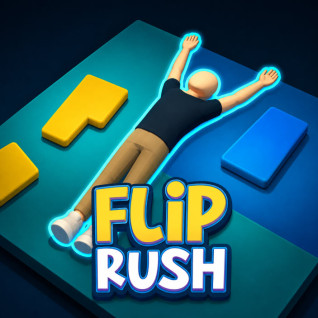
Flip Rush is a stunt-based physics game where the goal sounds simple at first, but gets tricky fast: you jump across platforms, pull off flips in mid-air, and try to stick the landing in the target zone. When I first tried it, I honestly thought, “Okay, this should be easy.” I was wrong pretty quickly—but in a fun way. It’s the kind of game that keeps pulling you back in because every jump feels like a small challenge to beat yourself.
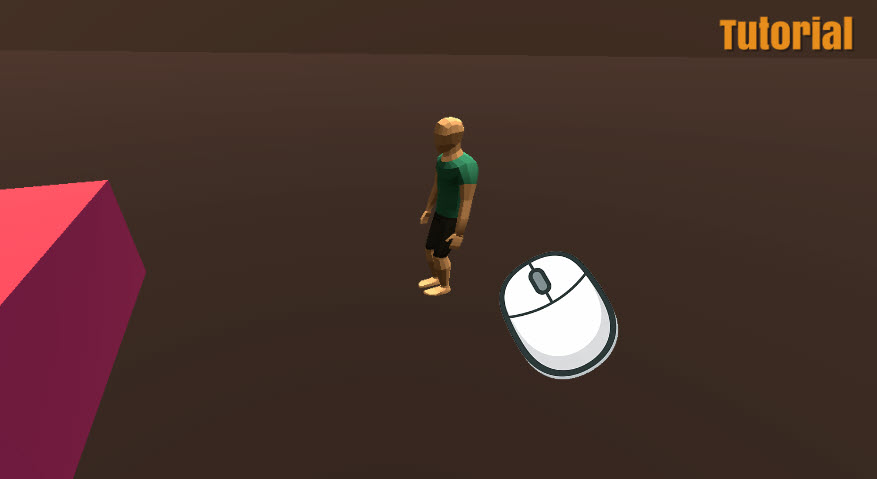
Realistic System
What really stands out in Flip Rush is how grounded the physics feel. The movement isn’t stiff or artificial—everything has weight to it. Gravity constantly pulls you down in a way that feels natural, so every jump has that real “hang time” where you’re just slightly anxious about how you’re going to land.
When you hold to flip in the air, your character doesn’t just stop or reset—it keeps rotating with momentum. That’s where I messed up a lot early on. I kept holding too long, thinking I could “fix it” mid-air, but the game doesn’t let you cheat physics like that. You really have to time your release so you can stabilize before landing.
Speed also plays a huge role. If you run in too fast, you’ll overshoot the landing zone. Too slow, and you won’t make the gap at all. It becomes this constant balancing act between power and control.
And then the landing… that’s the moment that decides everything. If your angle is right, you land clean and smooth. If not, you’ll crash, roll, or completely wipe out. It feels fair, though—like the game is always reacting logically, not randomly.
Increasing Difficulty Levels
As I played further, I noticed the difficulty ramps up in a really smart way. Early levels give you space to get used to the mechanics, but it doesn’t stay forgiving for long.
Platforms get further apart, landing zones shrink, and the angles become way less comfortable. At some point, I started actually pausing before jumps just to mentally calculate whether I was about to ruin everything or not.
The game also throws in more obstacles as you progress, which forces you to think about not just how far you jump, but how you rotate through the air. It stops being just about movement and starts feeling like controlled chaos.
Instructions
Space → Jump
Hold Space → Flip while in the air
Release Space → Stop spinning and stabilize for landing
Tips for Efficiency
Don’t overuse flips
I learned this the hard way—holding the flip too long almost always ruins the landing. A small, controlled rotation is usually all you need.
Time your jump carefully
Jumping too early or too late throws off your entire distance. Watching the platform and waiting for the right moment makes a huge difference.
Control your speed before takeoff
Your run-up speed basically decides your fate. I found that keeping it consistent works better than trying to go full speed every time.
Stabilize before landing
Let go at the right moment so your character can naturally settle into a balanced position. That tiny timing window matters more than you’d expect.
Learn from every failure
Most of my progress came from messing up first. Every failed landing teaches you something about timing, distance, or rotation.
Final Thoughts
So yeah, Flip Rush is simple on paper, but surprisingly demanding once you actually get into it. It’s frustrating at times, but in that satisfying “I can definitely do this better next try” kind of way.
Are you ready to try Flip Rush? Just don’t be surprised if you end up saying “one more attempt” way too many times.